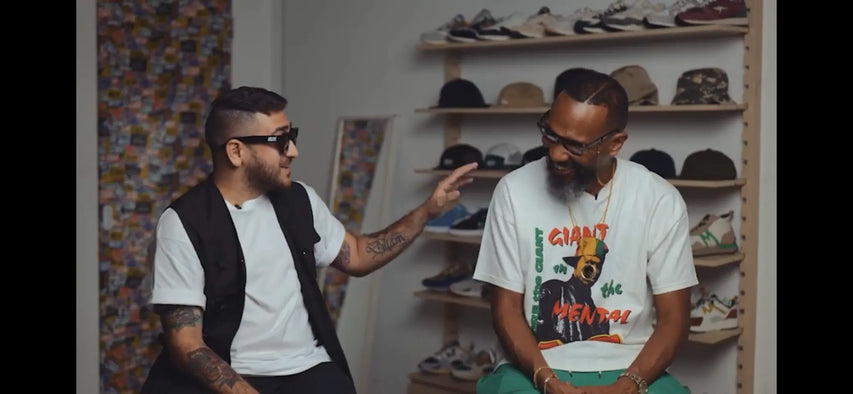
Get Familiar: LUWA
Interview by Passion DEEZ
For Luwa.mp4, being alternative has never simply been about how something looks. It is a way of thinking: questioning convention, building worlds from scratch and finding new ways to communicate a Nigerian identity without reducing it to something immediately recognisable.
Born and raised in Ibadan before spending formative years in the UK, Luwa’s relationship with music began in high school but became all-consuming during his gap year in 2019. What started with hyperpop experiments has since expanded into something harder to categorise, pulling from punk, electronic music, video games, Nigerian sounds and the visual language of science fiction.
Now back in Nigeria, Luwa is refining a universe of his own. He calls the wider aesthetic petrol punk: something raw, futuristic and unmistakably rooted in where he comes from without needing to announce itself as “African” at every turn.
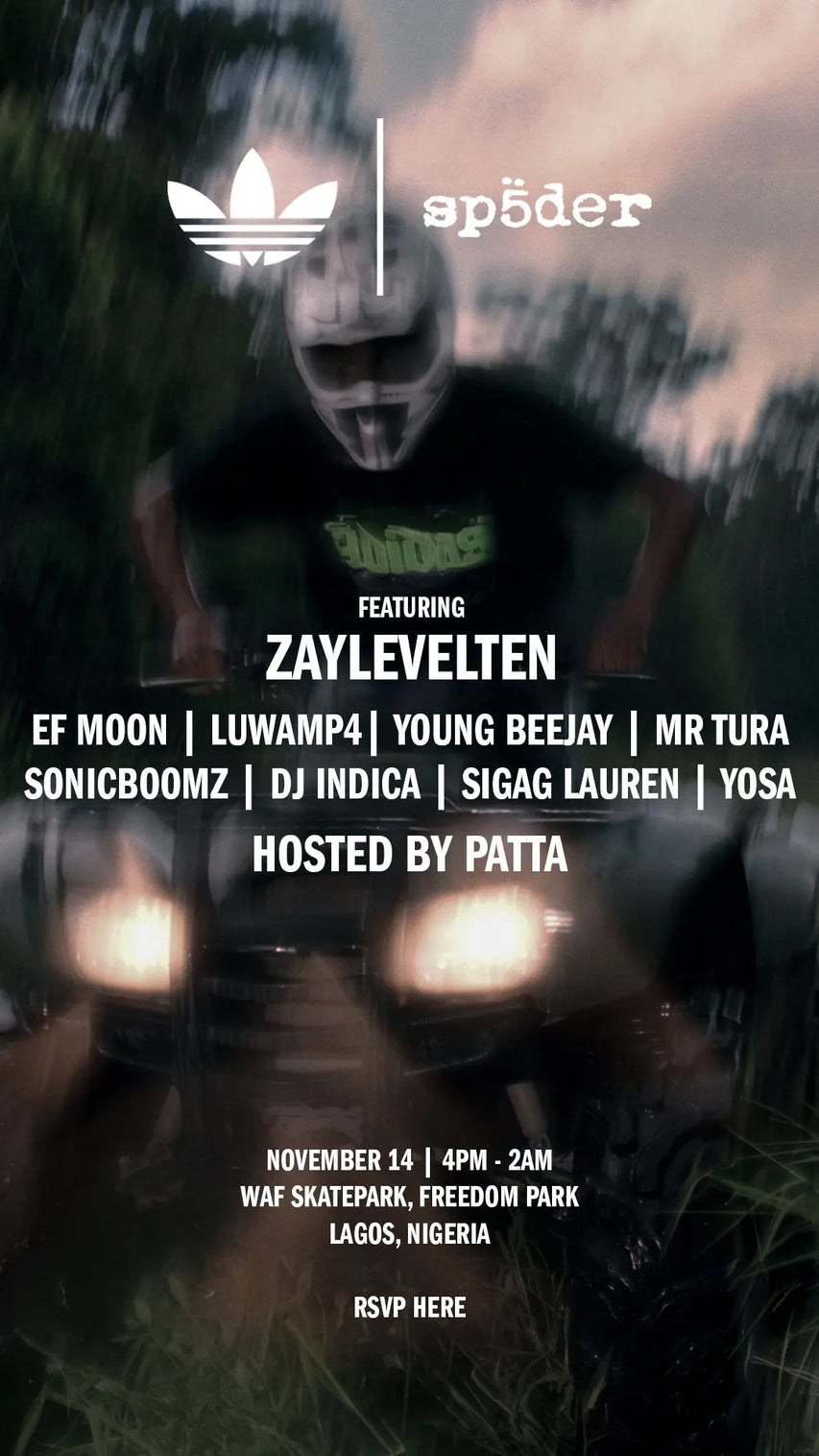
Ahead of his appearance at WAF Skatepark for adidas Originals x Sp5der hosted by Patta Lagos, we caught up with Luwa.mp4 to talk about growing up outside Lagos, rebellion, Nigeria’s new underground, world-building, the meaning of being alternative and his latest project, Young Riot.
For anyone getting familiar with you right now, what do we need to understand about where you come from and the artist you’ve become?
Music really started for me back in high school, but when it became my whole life was during my gap year in 2019. I had just come back to Nigeria because I spent the later part of high school in England and did my A-levels there. I tried a lot of other things. I was a science student and at one point I thought I wanted to go into investment banking, but music was always the thing I kept coming back to.
Right before COVID, I started writing a lot of songs. Then COVID hit and I realised music was what I could actually see myself doing for the long run. I went back to England later in 2020, but I got to a point where I was like, I don’t think I can do school because music is genuinely all I can think about.
I moved back to Nigeria in 2023, and I think that was really necessary. When I first started making music, I was making a lot of hyperpop, but moving back helped me think about what I actually represent. I’m very Nigerian. I grew up here my whole life. I didn’t even grow up in Lagos, I grew up in Ibadan. Nigeria is in my blood, so I had to ask myself: what does that look and feel like when I give that part of myself to the world? I’ve always approached music from quite an alternative and punk mindset, but every year I feel like I’ve grown deeper into this punk identity.
You grew up somewhere fairly traditional but became an artist whose identity is built around challenging convention. Where does that rebellious instinct come from?
My parents are more liberal than the typical Nigerian parents, but one thing they always encouraged us to do was think differently. That was almost the status quo between me and my siblings.
Growing up in Ibadan and then going to boarding school in Lagos, I always felt like an outsider. There might have been one other person from where I was from, while everybody else could relate to the same things and the same kind of upbringing. I think that made me understand early that maybe I just see things differently.
Even when I’m inspired by other people, one thing I always ask myself is, “How can I do this in my own way? What does my version actually look like?”
There were also things aesthetically and artistically that I was naturally drawn towards that challenged the norm, even inside my own household. I think that actually prepared me for criticism. If I can challenge things inside my own house and stand on what I believe, then I’m ready for whatever anybody outside has to say.

What was it like growing up in Ibadan while looking towards Lagos as this bigger world?
Ibadan is very traditional. It’s a very big place, but it doesn’t have that same feeling as Lagos. When you’re looking at Lagos from Ibadan, you see this huge city, but because you’re slightly removed from it, you can also see Lagos differently. When you’re born directly into Lagos, sometimes everything feels so big that it becomes difficult to look outside of it. Coming from Ibadan, I could see opportunities or perspectives that maybe people inside Lagos weren’t necessarily paying attention to.
Then moving to London gave me that same perspective on Nigeria in general. When I came to London, I saw how expressive the people around me could be compared to Nigeria. London can still be a conservative place, but it opened my eyes to another way people could express themselves. In a way, I started seeing London as another Lagos: another big city, another set of challenges, another place where there are things people aren’t necessarily paying attention to.
There has been a lot of conversation around Nigeria’s current underground in relation to the earlier alté movement. What has your generation inherited from that era, and what is different now?
One major difference is the idea of micro-communities within the underground. Alté was a very broad movement that really sparked change. What is happening now feels more like people taking that ideology — the idea that the next generation wants to do things differently — and defining smaller pieces within it.
You’re seeing more concise niches forming. There might be punk, there might be metal, there might be something completely different beside that there might be something completely different beside that. It isn’t necessarily about dividing the underground. It’s more about allowing different communities to define themselves properly. I think one thing we are doubling down on now is community and really defining what that means.
Individually, something I’ve taken from the generations before me is world-building. That is something I’m very interested in. Some people think you need to become huge before you start thinking about building a world around yourself, but I don’t believe that. You can start doing that from the very beginning.
You’ve previously described your sound as cyberphunk, but you’re now talking about something called “petrol punk.” What does that mean?
With cyberphunk, the “funk” came from the idea that there is a bounce to everything I’m doing. There is obviously funk music, and there’s Brazilian funk, but for me it was more about that feeling of movement.
The cyber part comes from the sounds I use. A lot of them literally come from video games, computers and digital systems. Those things are always in my mind when I’m working on music. But now I’m defining the wider aesthetic as something called petrol punk. I’ve always been inspired by things like steampunk, cyberpunk and solarpunk, and I started thinking: when we’re talking about Africa, why does it always have to be called “African punk”?
Why can’t it be something that feels African without necessarily having Africa in the name? I thought about petrol because, especially in Nigeria, petrol is one of our major exports. It is something raw, and that rawness made sense to me. That’s how I’m beginning to think about the whole aesthetic.
A lot of artists get labelled “alternative” because of how they dress or because their music doesn’t fit neatly into Afrobeats. What does being genuinely alternative mean to you?
Those things can be factors, but I think being alternative is really about the way you present the art. For me, it means looking at the way something is usually done and asking: “Why does it have to be done like that? What is another way?”
It doesn’t mean looking down on people who do things differently. It’s just about deciding what particular niche you are speaking to and thinking outside the box about how you want to present yourself to them. It’s really about context.
Across your recent releases, what do you hear changing most in your own music?
My songwriting has become simpler, but the emotion in the delivery has become stronger. My subject matter has also diversified. I think I’ve understood that sometimes less really is more.
What changed when you started thinking about making an album rather than singles or EPs?
When I made my debut album, I started from the idea that all the smaller worlds I had built before were almost like pilots. I wanted to make the actual film. In my head, I had to really commit to a character. It involved a lot of travelling and collaboration, and it helped me understand that I genuinely need other perspectives.
A lot of what I had done before was mostly on my own. I’m still spearheading the direction, but an album is different. This can become the soundtrack to someone’s life. Some people only listen to albums.
I had to think much more about cohesiveness, how different songs and different moods could still feel like they belonged in the same world while maintaining my artistic integrity.
I also wanted to see what I was capable of doing without committing to a deal or having some huge system behind me. I wanted to know what I could create with my own ideas and the people around me. And the collaboration wasn’t only with musicians. It was with brand owners, visual artists, creative directors — people who could look at the world I was building and tell me what it meant to them.
Why was it important to actually call it an album?
People sometimes talk about albums as if you need to reach a certain level financially or commercially before you’re allowed to make one. But to me, being ready to make an album is about being ready to lock yourself into a specific character and a specific mode.
I got tired of putting so much passion into the world-building around projects and then still saying, “It’s just a mixtape,” or, “It’s just an EP.” I was like, you know what? Let me call it an album. I don’t need to wait until I reach some quote-unquote big place before I can put that level of intention behind something.
Nigerian music is now one of the most globally visible scenes in the world. Do you ever feel pressure to make your Nigerian identity immediately recognisable to international listeners?
I wouldn’t call it pressure. I see it as a challenge, but it can also be much more rewarding. There are so many ways of expressing Nigerian identity that haven’t been explored yet. Somebody could hear something I make and immediately know it is Nigerian, but at the same time think, “I never knew Nigerian identity could be processed in this way.” That’s exciting to me. The main thing is not forcing it. I don’t want to make something just because I need everybody to know I’m Nigerian. It should already be in your body. It should naturally be part of what you make.
Your music feels like it could exist inside a film or a video game. If there were no limitations on budget, what would the full Luwa.mp4 universe look like?
Right now, I think Luwa.mp4 is a punk star, but almost like an actor who keeps playing different niche roles. If you look back at my older work, there was a whole werewolf era. Then I had this character that was like a punk footballer. Now I’m in this lizard kind of world. I almost think about it like Ben 10. There are all these different aliens, but they still come from the same person. Luwa.mp4 is this punk star who is known for playing these very specific roles.
I grew up as a Disney and Nickelodeon kid, so character and acting have always fascinated me. People sometimes talk about actors needing to be a blank canvas so they can disappear into a character. I’m interested in doing the opposite. I can still look exactly like myself, but each role feels like a completely different section of the same theme park. Right now, I’m thinking about how the lizard world connects into something more vampiric. It’s mystical, but cyber at the same time.

Outside of music, what are you consuming right now that is feeding the next version of yourself?
I’ve been watching Devilman Crybaby. I also recently discovered Entourage, and I’ve really been resonating with the characters. With games, I’m trying to go back and play older things like Infamous and Prototype. I loved those games when I was younger, and I can still see a lot of that inspiration bleeding into the characters I’m creating now.
Musically, I listen to everybody, but I find myself going back to older Nigerian music. A lot of that music feels very free. It doesn’t sound formulaic. It sounds like people were just saying, “You know what, bro? Let’s try anything. Let’s catch the rhythm.” I really connect to that freedom.
Do you think success changes the meaning of rebellion? At what point does the underground risk becoming part of the system it was originally pushing against?
Definitely. The more successful you become, what you’re rebelling against also changes. There can still be a core set of values, but your relationship with rebellion is going to evolve. I think the underground becomes part of the system when you can no longer feel the passion in what people are doing. That might sound vague or cliché, but the underground is synonymous with rawness.
When people stop being able to feel that rawness in the approach — not just aesthetically, but in the intention behind the work — that’s when you can tell something is being consumed by the mainstream.
Your new project Young Riot is out now. What does this chapter represent?
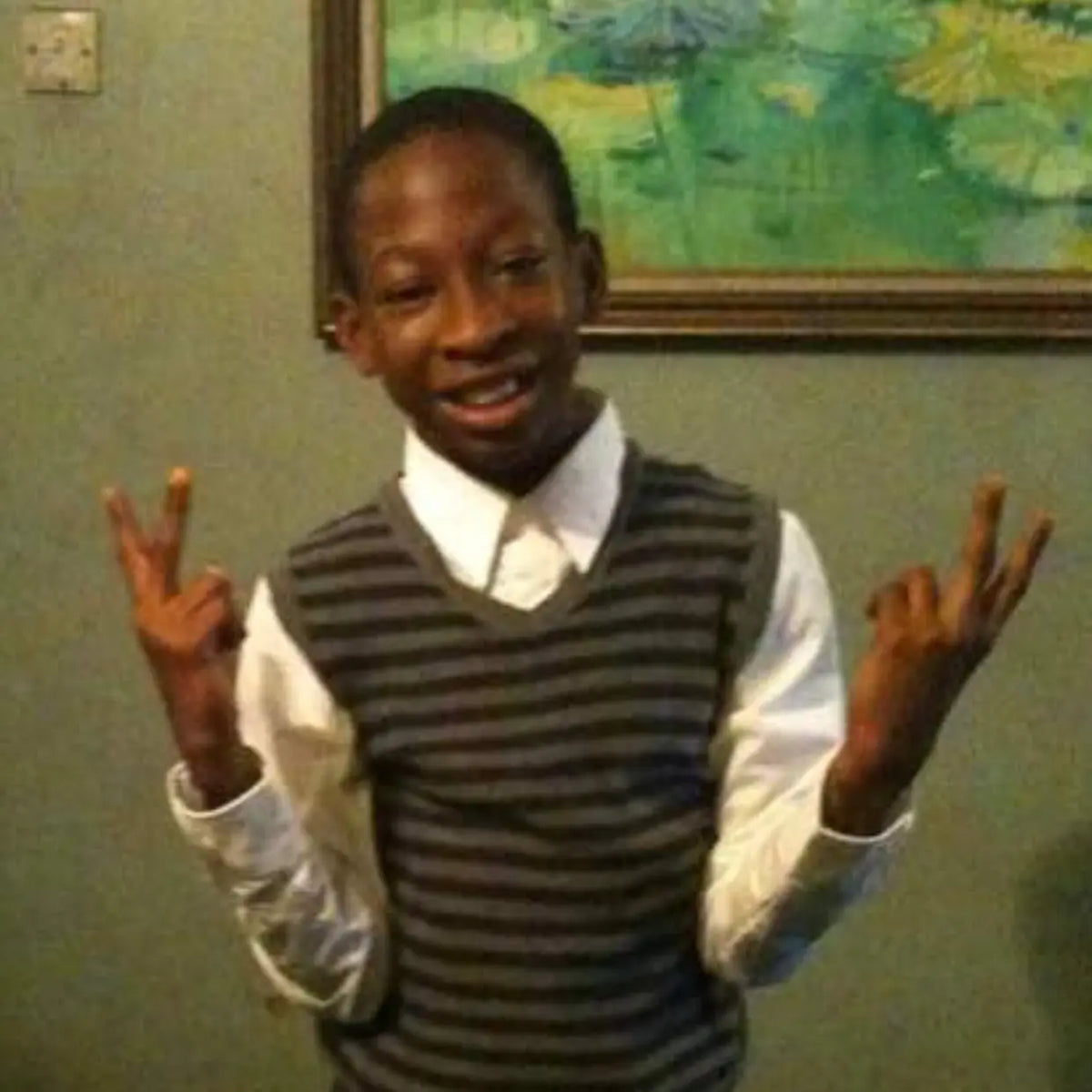
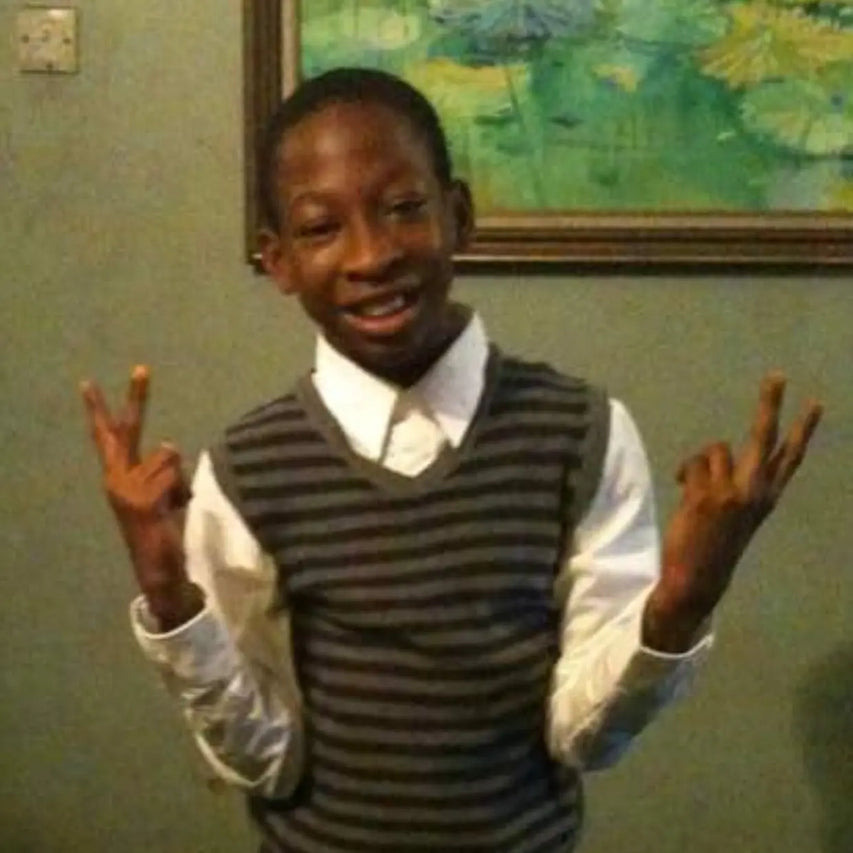
Young Riot has one of my most basic covers. It is literally just a photograph of me when I was really young, holding up two peace signs that almost look like Ys. There’s this phrase I’ve been playing with, “Yuri Yori,” which comes from Young Riots. It sounds African to me. It has this cultural feeling even before you necessarily understand what it means.
My previous project, PS Specimen, was basically my own experiment with mainstream music. Things were going well for me, so I started asking myself: what would it mean for me to try to make mainstream music?
And what I realised is that somebody like me can’t really make “mainstream music,” because what does that even mean when expression always comes first?
What I did learn from that era was the art of less is more. So Young Riots is the beginning of everything I learned from Specimen.
At the core of everything, I’m still just a young riot. My natural instinct is always going to be experimental, but I think I now understand what it means to be on a path towards being more authentic than I’ve ever been.
It is also a reconnection with my inner child. I look at that younger version of myself and think: this is the life that kid would have prayed for. He would look at me now and say, “Wow, I can’t believe this is me.” That’s what the project really represents.

From Ibadan to Lagos and London and back again, Luwa.mp4’s story is less about escaping where he comes from than learning how to reinterpret it. His music exists somewhere between punk instinct, digital experimentation and a distinctly Nigerian sense of place, with each release opening another door into the larger world he is constructing. With Young Riot, that world comes back to something simpler: the kid at the centre of it all, still curious, still rebellious and still asking why things have to be done the way they have always been done. Get familiar with Luwa.mp4 and stream Young Riot now.
-
-
Get Familiar: City Splash
-
What Went Down at adidas Originals x Sp5der
-
Get Familiar: LUWA
-
Oko Ebombo - African Star
-
What Went Down at Patta Amsterdam AW26 Cypher
-
Patta Magazine — Freelance Junior Art Director
-
Charles Burnett at Eye Filmmuseum
-
What Went Down at Patta London AW26 Cypher
-
Patta Lagos x adidas Originals x Sp5der party
